Modeling cooking time
In a Spring 2020 heat-transfer project, our team modeled how long a hot dog would take to cook. We first considered a lumped-capacitance approximation, but the calculated Biot number was above 0.1, indicating that internal temperature gradients could not be neglected.
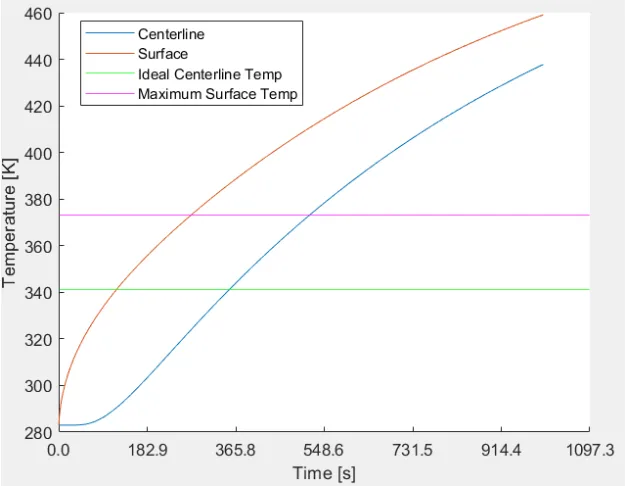
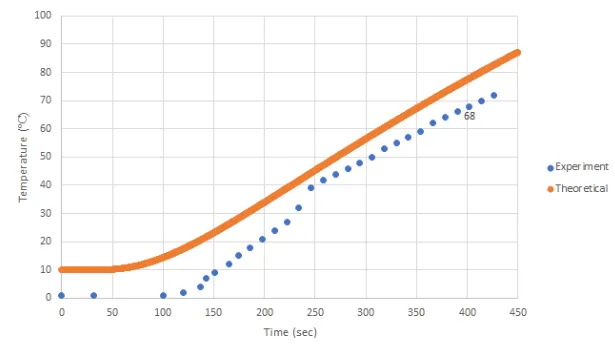
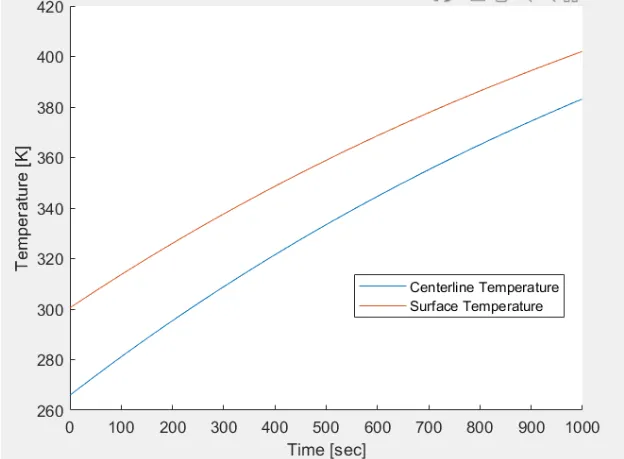
We developed a radial finite-difference model in MATLAB, with equations for the center, interior, and surface nodes. The model predicted a cooking time of 353 seconds, compared with 402 seconds in the experiment. The test conditions did not exactly match the model, including an initial-temperature difference.
The comparison was a useful lesson in connecting a numerical model to an imperfect experiment.